X-ray screening operator certification requires extensive training in threat recognition, equipment operation, and regulatory compliance. TSA mandates rigorous initial and recurrent training for all screening personnel, with performance tracked through Threat Image Projection (TIP) systems and annual competency testing.
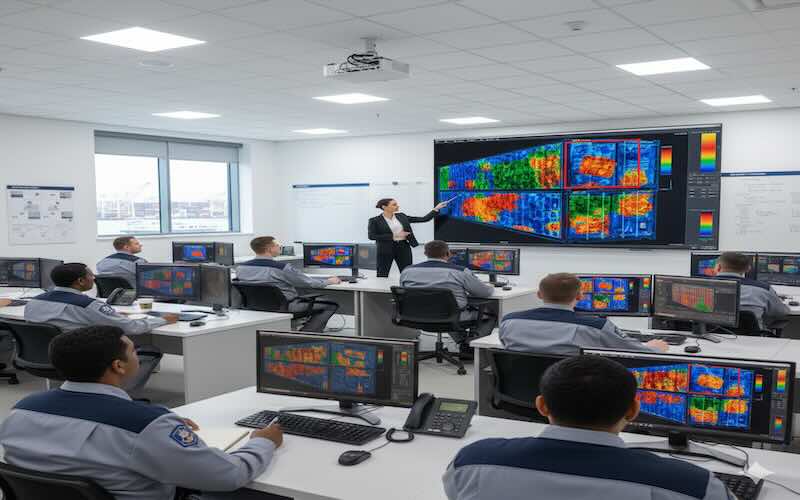
TSA screener training classroom with X-ray image interpretation instruction
TSA Transportation Security Officer (TSO) Training
Pre-Employment Requirements
- U.S. Citizenship: Required for all TSA positions
- Background Investigation: Comprehensive criminal and credit history check
- Drug Screening: Urinalysis testing for prohibited substances
- Medical Evaluation: Physical examination including vision/hearing standards
- Security Clearance: Confidential or Secret clearance depending on airport category
Initial Training Program
Duration: 120-160 hours over 2-4 weeks
Phase 1: Classroom Instruction (40 hours)
- Aviation Security Fundamentals
- Threat Recognition Theory
- Prohibited Items Identification
- X-Ray Physics and Imaging Principles
- Passenger Interaction and Customer Service
- Civil Rights and Non-Discrimination
- Standard Operating Procedures (SOPs)
Phase 2: X-Ray Image Interpretation Training (80 hours)
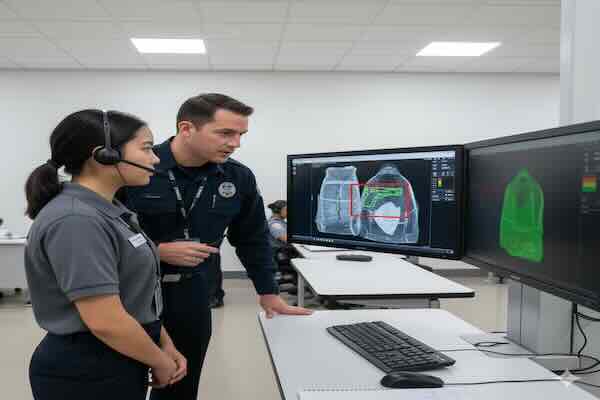
TSO trainee analyzing X-ray baggage images for threat detection
- Dual-Energy Imaging: Color coding, material discrimination, density analysis
- Threat Pattern Recognition: IED components, firearms, knives, explosives
- Image Manipulation: Rotation, zoom, color enhancement, auto-analysis tools
- Bag Configuration Analysis: Dense packing, layering, suspicious geometries
- Simulated Screening: Computer-based training with threat libraries
Phase 3: On-the-Job Training (60 hours)
- Supervised live screening operations
- Equipment operation under mentor guidance
- Bag resolution procedures
- Communication protocols with supervisory staff
- Alarm adjudication and secondary screening
Phase 4: Certification Testing
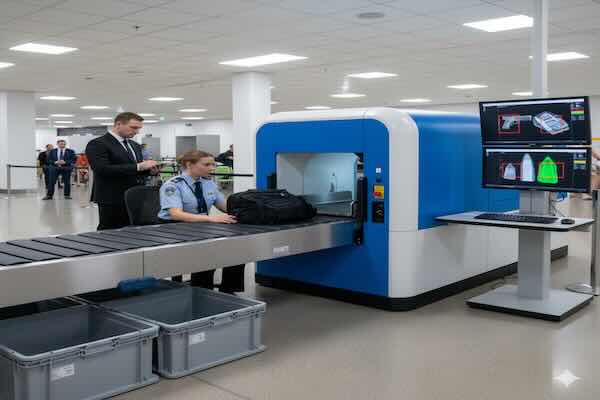
TSO undergoing certification testing at checkpoint with TIP system
- Written Examination: 100 questions, 80% pass threshold
- Practical Demonstration: Live threat detection with certified test bags
- Equipment Proficiency: Operational competency on all checkpoint technologies
- SOP Knowledge: Scenario-based application of procedures
Threat Image Projection (TIP) Performance System
TIP Program Overview
TSA's quality assurance tool superimposes synthetic threat objects onto live X-ray feeds to measure operator vigilance and detection performance.
Operational Parameters
| Parameter | Requirement |
|---|---|
| TIP Frequency | Minimum 2 images per operator per hour |
| Threat Library Size | 100+ certified threat articles |
| Response Time | 10 seconds maximum identification window |
| Pass Threshold | 80% correct identification for certification |
| Remedial Training Trigger | <70% performance over 30 days |
Threat Categories in TIP Library
- Firearms: Handguns, rifles, disassembled components
- IED Components: Detonators, wiring, power sources, explosive simulants
- Edged Weapons: Knives, box cutters, improvised blades
- Prohibited Items: Tools, liquids, incendiaries
- Artful Concealment: Threat objects hidden within electronics, food, clothing
Performance Metrics and Tracking
Individual Operator Score (IOS)
Rolling 90-day TIP performance calculation:
- True Positive Rate: Percentage of threats correctly identified
- False Alarm Rate: Benign bags incorrectly flagged
- Miss Rate: Threats not identified (most critical metric)
- Response Time: Average seconds to alarm on threat images
Checkpoint Performance Indicator (CPI)
Aggregate screening lane metrics tracked by Transportation Security Operations Center (TSOC):
- Average IOS across all operators
- Throughput (bags per hour)
- Bag check rate (percentage requiring secondary screening)
- Equipment uptime and malfunction frequency
Specialized Training Programs
CT Operator Advanced Training
Computed tomography systems require additional certification beyond standard dual-energy training.
CT-Specific Curriculum (40 hours)
- 3D Image Interpretation: Multi-planar reconstruction navigation
- Volumetric Analysis: Virtual bag dissection techniques
- Automated Threat Recognition (ATR): Understanding algorithmic alarms
- Density Measurement: Effective atomic number (Zeff) interpretation
- Advanced Threat Configurations: Liquid explosives, composite devices
Cargo Screener Certification
TSA Certified Cargo Screening Program (CCSP) requirements for air freight inspection.
Training Components
- Air Cargo Security Regulations: 49 CFR Parts 1548/1549
- Pallet and ULD Screening: Large-format X-ray interpretation
- Explosive Trace Detection (ETD): Sample collection and analysis
- Physical Search Procedures: Manual inspection protocols
- Chain of Custody: Documentation and tracking requirements
CCSP Certification Process
- TSA Background Check: Security Threat Assessment (STA)
- Facility Approval: CCSP facility certification
- Initial Training: 40 hours classroom + practical
- Validation Testing: Live cargo screening demonstration
- Annual Recertification: Refresher training and competency testing
Canine Handler Certification
TSA National Explosives Detection Canine Team Program (NEDCTP) training for explosive detection dogs.
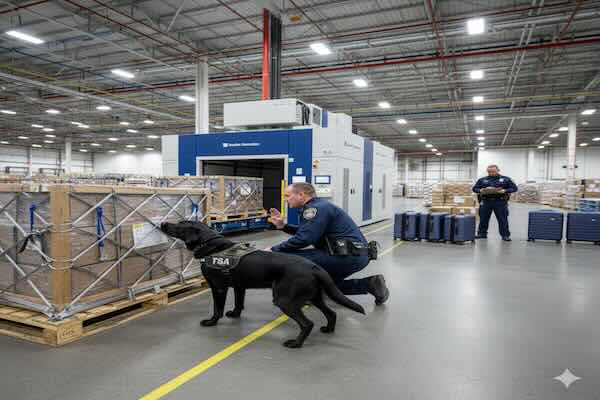
TSA canine handler training with explosive detection dog
Program Structure
- Duration: 10 weeks residential training at Lackland AFB, Texas
- Handler Selection: TSA employees or law enforcement officers
- Canine Selection: Typically Labrador Retrievers, German Shepherds, Vizslas
- Odor Imprinting: Training on 19 explosive odors including TATP, PETN, RDX, TNT
- Operational Scenarios: Baggage, cargo, vehicle, and open-area searches
- Annual Recertification: Mandatory proficiency testing
Recurrent Training and Continuing Education
Annual Recertification Requirements
- Threat Recognition Testing: Live screening with certified test bags
- Written Examination: Updated SOPs and new threat patterns
- Equipment Proficiency: Demonstration on all assigned technologies
- Physical Fitness: Ability to perform screening duties (lifting, standing)
- Customer Service Evaluation: Passenger interaction observation
Quarterly Refresher Training
- New Threat Briefings: Intelligence updates on evolving tactics
- Procedure Updates: Security Directive changes
- Equipment Enhancements: Software upgrades and new features
- Case Studies: Analysis of screening failures and near-misses
Career Development Pathways
TSA Career Progression
- Transportation Security Officer (TSO): Entry-level screener (SV-D/E band)
- Lead TSO (LTSO): Shift supervision, training coordination (SV-F)
- Supervisory TSO (STSO): Checkpoint management (SV-G)
- Transportation Security Manager (TSM): Airport security operations (SV-H/I)
- Federal Security Director (FSD): Airport executive leadership (SV-J)
Specialized Assignments
- Behavior Detection Officer (BDO): Passenger behavior analysis
- Explosives Specialist: ETD operations and training
- TIP Administrator: Performance data management
- Training Instructor: Initial and recurrent training delivery
- Compliance Inspector: Airport security auditing
Private Sector Training and Certification
ASIS International Certification
Professional security certification for private screening operations:
- Certified Protection Professional (CPP): Senior security management
- Physical Security Professional (PSP): Access control and screening operations
- Associate Protection Professional (APP): Entry-level security certification
Equipment Manufacturer Training
Vendor-specific certification programs:
Major Manufacturers
- Smiths Detection: HI-SCAN operator certification (2-3 days)
- Rapiscan Systems: 600 Series and CT operator training (3-5 days)
- L3Harris: ClearScan and CT advanced certification (1 week)
- Analogic: ConneCT CT operator training (3 days)
Training Components
- System architecture and component function
- Image optimization and quality assurance
- Preventive maintenance procedures
- Troubleshooting and fault diagnosis
- Software updates and calibration
International Training Standards
ICAO Aviation Security Training Program (ASTP)
International Civil Aviation Organization training framework:
- Module 1: National Aviation Security Program Management
- Module 2: Aviation Security Instructor Training
- Module 3: Aviation Security Auditing
- Module 8: Screening Operations and Technology
ECAC Certification Standards
European Civil Aviation Conference operator competency requirements:
- Level 1: Basic screener (35 hours minimum)
- Level 2: X-ray operator specialist (75 hours)
- Level 3: Screening supervisor (120 hours)
- Recurrent: Annual 12-hour refresher mandatory
Cost and Investment Analysis
Training Cost Breakdown
| Training Program | Duration | Cost per Student (USD) |
|---|---|---|
| TSA TSO Initial Training | 2-4 weeks | $8,000 - $12,000 |
| CT Operator Advanced | 1 week | $2,500 - $4,000 |
| CCSP Cargo Screening | 5 days | $1,500 - $2,500 |
| Canine Handler (NEDCTP) | 10 weeks | $25,000 - $35,000 |
| Manufacturer Equipment | 2-5 days | $800 - $3,000 |
Return on Investment
- Reduced False Alarms: Trained operators decrease bag check rate by 20-30%
- Increased Throughput: Efficient screening improves passenger flow
- Enhanced Security: Higher detection rates prevent security incidents
- Regulatory Compliance: Avoid fines and operational shutdowns
- Employee Retention: Career development reduces turnover costs